
- Catalogs
- Viking Anchors
- Odin Viking Delta Rocna bow roller position


- Company
- Products
- Catalogs
- News & Trends
- Exhibitions
Odin Viking Delta Rocna bow roller position
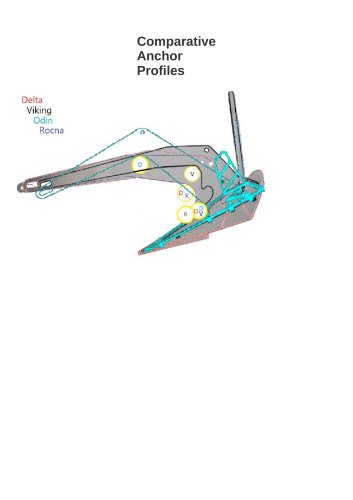
Odin Viking Delta Rocna bow roller position
Comparative Anchor Profiles: Structured Summary
1. Overview
This document provides a comparative analysis of various anchor profiles used in construction or engineering applications. It aims to outline the specifications, performance characteristics, and suitability of different anchor types.
2. Specifications
The anchor profiles are detailed with respect to their dimensions, material composition, load capacities, and installation requirements. Key parameters include tensile strength, shear resistance, corrosion resistance, and compatibility with different substrates.
3. Performance Comparison
The profiles are compared based on mechanical performance under various load conditions. This includes static and dynamic loads, environmental factors affecting durability, and failure modes. Tables summarize maximum allowable loads and safety factors.
4. Installation Procedures
Recommended installation methods for each anchor profile are described, highlighting best practices to ensure optimal performance. This includes surface preparation, anchoring depth, torque specifications, and curing times where applicable.
5. Standards and Compliance
The document references relevant industry standards and certifications that each anchor profile meets. This ensures compliance with safety regulations and quality assurance protocols.
6. Recommendations and Limitations
Guidelines are provided for selecting the appropriate anchor profile based on application requirements, environmental conditions, and load demands. Limitations such as maximum embedment depth or unsuitable substrates are noted to prevent misuse.
7. Summary Tables and Data
Comparative tables present critical data such as load ratings, dimensions, and material grades. These facilitate quick reference and decision-making for engineers and designers.
Conclusion
The comparative analysis enables informed selection of anchor profiles by balancing performance, installation complexity, and compliance considerations, ensuring safety and efficiency in structural applications.
Catalog excerpts
Comparative Anchor Profiles
Open the catalog to page 1All Viking Anchors catalogs and brochures
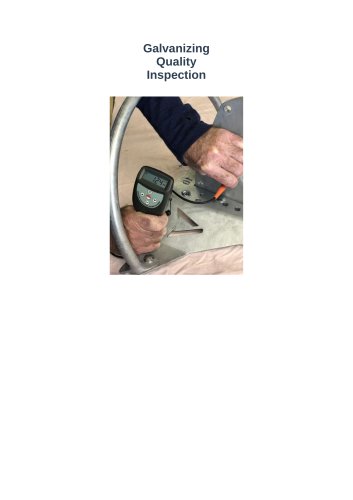 Galvanizing thickness
1 Page
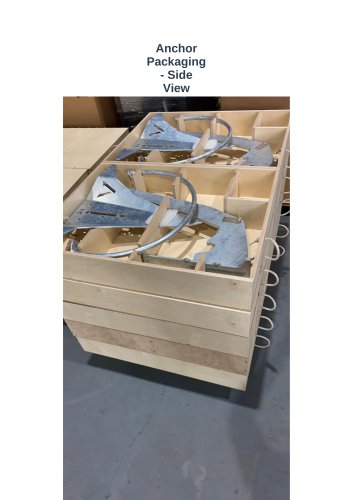 Open shipping boxes
1 Page
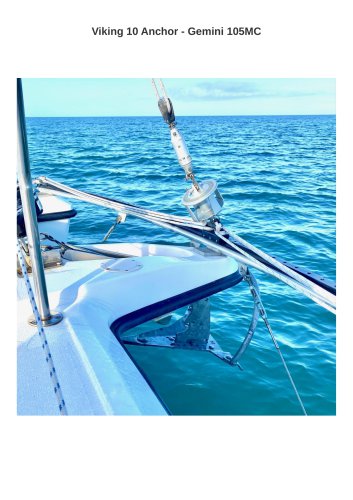 Viking 10 on gemini
1 Page
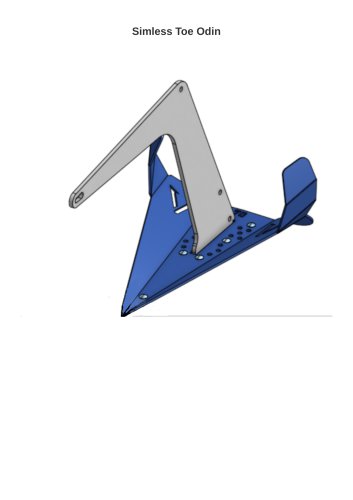 Odin
Odin1 Page
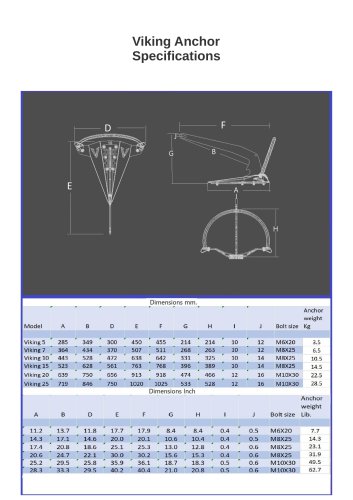 Viking dimentions
1 Page
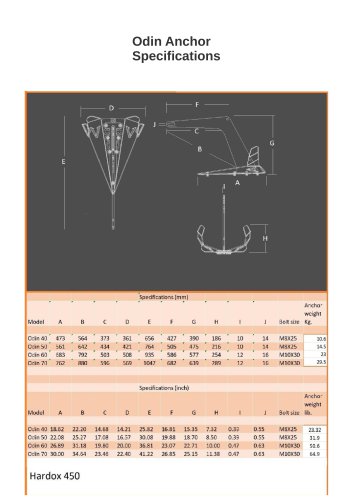 Odin dimentions
1 Page