
- Catalogs
- Trelleborg Marine and Infrastructure
- Barometer Report 3


- Products
- Catalogs
- News & Trends
- Exhibitions
Barometer Report 3

Barometer Report 3
Ports are facing challenges due to increasing container traffic and larger vessel sizes, leading to congestion and delays. This is compounded by insufficient investment in port infrastructure, risking reputational damage and revenue loss. Proactive upgrades are necessary to adapt to market changes and prevent unscheduled downtime.
Scope
The Barometer Report, based on late 2012 market research with nearly 300 marine terminal stakeholders, benchmarks results against previous years and introduces new topics across four themes: Investment and Demand, Monitoring and Automation, Service and Operation, and Compliance and Regulation.
Investment and Demand
Over 70% of respondents anticipate growth in capital and operational expenditure in marine infrastructure over the next year. The LNG sector is expected to see the highest demand increase, particularly in the Middle East, Australia, and Russia. The report stresses the importance of prioritizing quality and safety over short-term cost savings.
Monitoring and Automation
While 50% of respondents recognize the benefits of increased monitoring and automation, 60% still rely on manual guidance. There is a significant opportunity to enhance safety and efficiency through automation, with 84% expecting improved safety from integrating monitoring systems into mooring equipment.
Service and Operation
Over 90% of respondents report unscheduled downtime, a notable rise from previous years, which is costly and damages stakeholder relationships. The report highlights the need for infrastructure upgrades to accommodate larger vessels and reduce downtime.
Compliance and Regulation
65% of respondents seek PIANC certification for marine fenders, but there is concern about supplier assurances. Nearly 90% trust OEMs over trading companies for quality products. The report advises against complacency and underscores the importance of due diligence in procurement.
Conclusion
The report concludes by cautioning against blindly trusting suppliers and emphasizes the need for rigorous verification of product quality and compliance with industry standards.
Introduction
The document underscores the importance of ensuring the quality and reliability of marine fender systems, highlighting risks associated with low-quality products and the necessity for thorough due diligence.
Specifications and Quality Assurance
It stresses verifying that fenders meet described specifications and rubber quality to ensure safety and performance. Independent research shows some suppliers provide fenders with inadequate materials, leading to poor performance.
Recommendations
- Request third-party testing for procured equipment.
- Thoroughly investigate PIANC accreditation to avoid misleading supplier claims.
- Download the whitepaper "Fenders, why it’s not so black and white" to understand the impact of compound quality on performance.
- Adopt a holistic approach to infrastructure, integrating docking and mooring solutions with automation for optimized operations.
- Consider whole life costs in facility updates to avoid long-term expenses from short-term savings.
Monitoring and Automation
The document discusses the benefits of implementing monitoring systems, with 71% of respondents seeing value in increased monitoring and automation to enhance productivity and reduce maintenance.
Investment and Demand
It forecasts increased demand in sectors such as LNG, cruise/passenger, and oil terminals, emphasizing the need to update port facilities to accommodate larger vessels and reduce unscheduled downtime.
Challenges and Compliance
Challenges include increased management, maintenance, compliance, and energy consumption. The document stresses the importance of trusting suppliers, requesting certifications, and penalizing failures to ensure compliance and quality.
Conclusion
Trelleborg Marine Systems offers bespoke fender systems and marine products, leveraging polymer engineering expertise to enhance marine operations globally.
Catalog excerpts

Trelleborg Marine Systems
Open the catalog to page 1
Preface Many ports are ill equipped and unable to deal with increases in container traffic. Investment in global port infrastructure has generally lagged demand, leading to congestion and delays at a number of major ports. These delays have the knock on effect of increases in demurrage costs, higher fuel costs incurred to make up delays as well as re-adjusted schedules to account for. – Port Strategy, 2012 Marine infrastructure is strained as ports struggle to keep up with new developments such as increasing container traffic, increasing vessel sizes and the rapid growth of emerging sectors,...
Open the catalog to page 2
Scope This year’s edition of the Barometer Report is based on a phase of market research conducted in the last quarter of 2012, surveying a range of stakeholders across the ports, harbours and marine terminal industry. The sample comprises almost 300 respondents and includes port owners, operators, contractors, consultants, engineers and project managers. The report is broken down in two ways. Firstly, where applicable, there’s a benchmark of this year’s results against the two previous reports from 2010 and 2011, to examine how the market has changed during this period. Secondly, we evaluate...
Open the catalog to page 3
Investment and Demand Do you expect CAPITAL expenditure in the marine infrastructure sector (ports, harbours, terminals) to grow in the next 12 months? Key Findings ❙ Over 70% confident that there will be CapEx growth in the next 12 months. ❙ Over 70% confident that there will be OpEx growth in the next 12 months. Trelleborg says: As per the trend in 2011, the market remains positive about investment over the next 12 months, indicating the potential for more projects, and stimulation of the entire supply chain. Specifiers should take this opportunity to make investment decisions more wisely and...
Open the catalog to page 4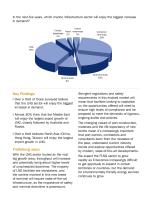
In the next five years, which marine infrastructure sector will enjoy the biggest increase in demand? Inland Cruise/ Naval waterways passenger 2% 3% 5% Key Findings ❙ Over a third of those surveyed believe that the LNG sector will enjoy the biggest increase in demand. ❙ Almost 30% think that the Middle East will enjoy the largest export growth of LNG, closely followed by Australia and Russia. ❙ Over a third believes North Asia (China, Hong Kong, Taiwan) will enjoy the largest import growth in LNG. Trelleborg says: With the LNG sector touted as the next big growth area, throughput will increase...
Open the catalog to page 5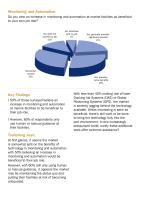
Monitoring and Automation Do you view an increase in monitoring and automation at marine facilities as beneficial to your own job role? Key Findings ❙ 0% of those surveyed believe an 5 increase in monitoring and automation at marine facilities to be beneficial to their job role. ❙ However, 60% of respondents only use human or manual guidance at their facilities. Trelleborg says: At first glance, it seems the market is somewhat split on the benefits of technology in monitoring and automation with 50% believing an increase in monitoring and automation would be beneficial to their job role. However,...
Open the catalog to page 6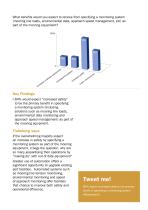
What benefits would you expect to receive from specifying a monitoring system (mooring line loads, environmental data, approach speed management, etc) as part of the mooring equipment? 100% 84% Key Findings ❙ 84% would expect “increased safety” to be the primary benefit in specifying a monitoring system (including solutions such as mooring line loads, environmental data monitoring and approach speed management) as part of the mooring equipment. Trelleborg says: If the overwhelming majority expect an increase in safety by specifying a monitoring system as part of the mooring equipment, it begs...
Open the catalog to page 7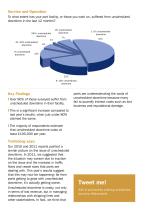
Service and Operation To what extent has your port facility, or those you work on, suffered from unscheduled downtime in the last 12 months? 50%+ unscheduled downtime 21–50% unscheduled downtime 6–10% unscheduled downtime Key Findings ❙ Over 90% of those surveyed suffer from unscheduled downtime in their facility. ports are underestimating the costs of unscheduled downtime because many fail to quantify indirect costs such as lost business and reputational damage. ❙ his is a significant increase compared to T last year’s results, when just under 80% claimed the same. ❙ he majority of respondents...
Open the catalog to page 8
What do you think are the main challenges brought about by the general increase in vessel sizes? 100% 85% ing ce ist ies es an nts ex cilit t ng g) ten me en .. ate fa lle in s ain uire pd als/ ha or em ty,. ion s m q gs l c , mo ag ivi o u min d e llis se a tu e an duct d t ter se r co is tic put e of a nc of ar m gis ugh d mpro re gy Ne ort lia ons o e k sts er s ff p Inc d l hro as es ( mp ati ris /ne co en ion e sta ps co gul d/ creeng ed as (t ed iss d e In ll an ed ga as as /em se /r cre m a re as ill a In de cre ion ch re /sk re nc I In pt ed Inc ing Inc as in um re tra ns Inc co Key Findings...
Open the catalog to page 9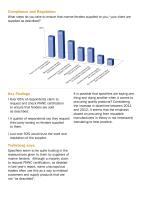
Compliance and Regulation What steps do you take to ensure that marine fenders supplied to you / your client are supplied as described? 100% 65% 51% 41% 31% 13% ion r t es ) tat lie / et C pu pp re th PIAN re su tu nty on g i / c s ck ( ss in rd he ufa rre nd l) he ion mi est wo of t er an s wa ou eta t/c at om ty t pli re he ue es tific mp r/m e mlier’ t/c par up ilu nt o u th p iss ers ti es rd /c bbe eq cer e s ct fa s d p s R an nd qu i th ce u Tru ten su te rodu Re th ad ed fe ur ls (r ex o h cu e/ t s ria er li se or p ok ac te ev pp pro f Inv ex a /n su e/ ify for m ing with lis ec th...
Open the catalog to page 10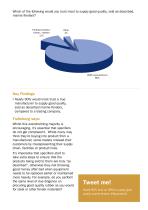
Which of the following would you trust most to supply good quality, sold as described, marine fenders? Trading company / broker / reseller 11% Key Findings ❙ Nearly 90% would most trust a true manufacturer to supply good quality, sold as described marine fenders, compared to a trading company. Trelleborg says: Whilst this overwhelming majority is encouraging, it’s essential that specifiers do not get complacent. Whilst many may think they’re buying into product from a manufacturer, some traders mislead their customers by misrepresenting their supply chain, facilities or product lines. It’s imperative...
Open the catalog to page 11All Trelleborg Marine and Infrastructure catalogs and brochures
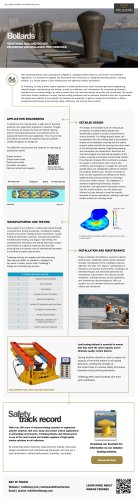 Bollard infographic
1 Page
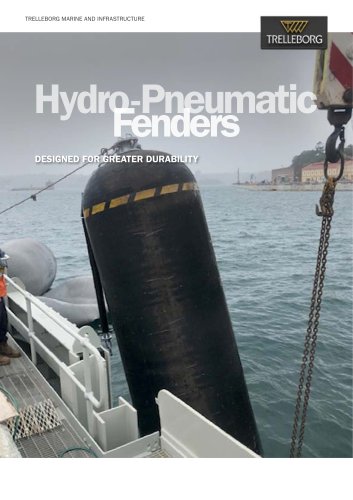 Hydro-Pneumatic Fenders (HPNE)
10 Pages
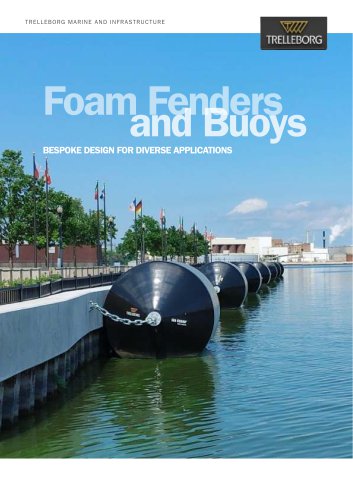 Foam Fenders & Buoys
24 Pages
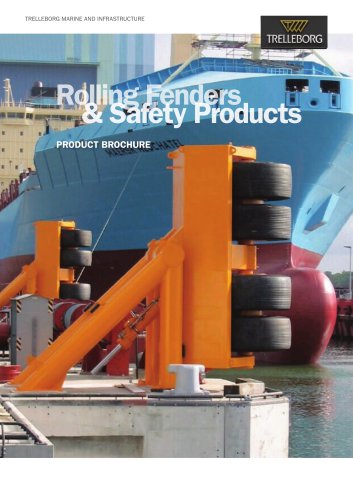
Archived catalogs
 SafePilot brochure
20 Pages
 Fender Systems
86 Pages
 AutoMoor Brochure
24 Pages
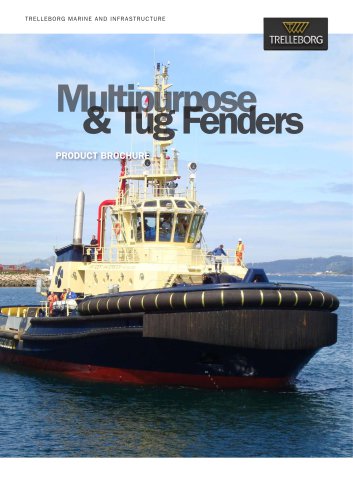
 Multipurpose and Tug Fenders
44 Pages
 Solid SmartFender Factsheet
2 Pages
 Fender Application Design Manual
88 Pages
 Bollards
28 Pages
 Pneumatic Fenders brochure
28 Pages
 DynaMoor
20 Pages
 Rolling Fenders and Safety
18 Pages
 Ship-Shore Links Factsheet
4 Pages
 TRELLEBORG’S Tugger Winch
2 Pages
 Universal Safety Link
3 Pages
 Docking & Mooring
88 Pages
 Performance Monitoring
3 Pages
 SmartDock ® Display Board
4 Pages
 LNG Infographic
8 Pages
 SmartMoor Series II
7 Pages
 Surface Buoyancy
24 Pages
 TRELLEBORG DYNAMOOR
4 Pages
 Accessories
10 Pages
 SmartDAS Factsheet
2 Pages
 Capstans
4 Pages
 Remote Release System
6 Pages
 lload monitoring software
2 Pages
 Barometer Report 2
7 Pages
 lload monitoring systeme
5 Pages
 Guide - Fenders
8 Pages
 Mini Guide - Foam Fenders
5 Pages
 Hawser Hooks
6 Pages
 Whitepaper - Correction Factors
10 Pages
 Buoy Range Table
2 Pages
 SafePilot CAT XT System
2 Pages
 AutoMoor Datasheet
4 Pages
 Ship Shore Link System
3 Pages
 Combined ESDS & SSL
3 Pages
 Prelude LNG
1 Page
 Floating Fenders
48 Pages
 Emergency Shutdown Link
3 Pages
 Safepilot SmartPort System
16 Pages
 SafePilot User Guide
30 Pages
 Docking and mooring
2 Pages


- Nautical buoy
- Ship winch
- Motorboat fender
- Dock fender
- Plastic buoy
- Floating boom
- Cylindrical fender
- Black fender
- Hydraulic drive winch
- Trelleborg harbor fender
- Containment boom
- Inflatable fender
- Trelleborg pier fender
- Manual ladder
- Nautical mooring buoy
- Nautical capstan
- Polyethylene buoy
- Sheltered waters boom
- Anchor chain