
- Catalogs
- ST Engineering
- UNMANNED SURFACE VEHICLE

UNMANNED SURFACE VEHICLE

UNMANNED SURFACE VEHICLE
This document outlines the features and capabilities of an Unmanned Surface Vehicle (USV) designed for safer and smarter marine operations. It highlights the autonomous electronics and sensors, navigational intelligence system, shore control, communications, and vessel capabilities.
Autonomous Electronics & Sensors
The USV is equipped with a Global Positioning System (GPS), Automatic Identification System (AIS), and Inertial Navigation System (INS). It also features 225° vision cameras and a 3-foot navigation radar to enhance situational awareness.
Navigational Intelligence System
The system includes a dual-bus architecture for high availability, with options for hot standby in a master/slave configuration. It integrates a perception sensor fusion system, guidance and control system, and reactive obstacle encounter processing and avoidance system.
Shore Control
Shore control capabilities include mission planning, rate-based steering commands for payloads and the vehicle, goal-based vehicular and payload control, and immediate man-take-over control of the vessel.
Communications
The USV supports commercial line-of-sight (LOS) point-to-point communications infrastructure and commercial relay architecture.
Capabilities
The USV is 9.00 meters in length overall, with a waterline length of 9.95 meters, a beam of 2.40 meters, and a draft of 0.45 meters. It is powered by a single 425 BHp engine and uses a waterjet propulsion system. The builder is Tesco Indomaritim.
Vessel Information Payloads
The USV is equipped with Long Range Acoustic Device (LRAD), search light, electro-optics, 360-degree vision cameras, and radar.
Other Applications
The USV can be used for harbor security and illegal fishing enforcement.
Contact Information
For more information, visit www.stengg.com or contact digitalsystems[at]stengg.com.
© 2021 ST Engineering Unmanned & Integrated Systems Pte. Ltd. All rights reserved.
Catalog excerpts
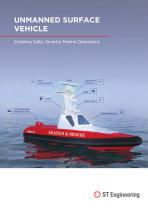
UNMANNED SURFACE VEHICLE Enabling Safer, Smarter Marine Operations
Open the catalog to page 1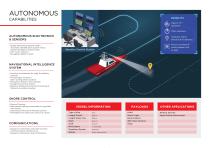
• Global Positioning System (GPS) / Automatic Identification System (AIS) / Inertial Navigation System (INS) • Navigation Radar (3 feet) • Dual-bus Architecture for High Availability (option) Slave Configuration (option) • Perception Sensor Fusion System • Guidance & Control System • Reactive Obstacle Encounter Processing & Obstacle Avoidance System • Mission Planning • Rate-based steering commands for payloads and vehicle • Goal-based Vehicular & Payload Control • Immediate man-take-over control of vessel COMMUNICATIONS • Supports commercial LOS point-to-point communications infrastructure •...
Open the catalog to page 2
www.stengg.com [email protected] © 2021 ST Engineering Unmanned & Integrated Systems Pte. Ltd.. All rights reserved.
Open the catalog to page 3All ST Engineering catalogs and brochures
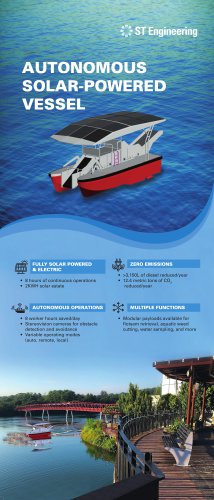 JUPITER ASPV
1 Page


 鄂公网安备42018502009513号 -