

sMRT AU10-M Product Brochure
sMRT AU10-M Product Brochure
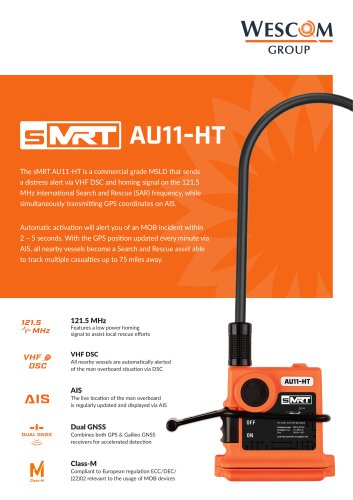
- Dual GNSS: Utilizes both GPS and Galileo receivers for quick location detection.
- VHF DSC: Automatically alerts nearby vessels via DSC VHF.
- Frequency: Transmits a 121.5 MHz homing signal.
- Battery: 6V Li-MnO2 with a minimum life of 12 hours at -20°C and a shelf life of over 3 years at +20°C.
- Environmental Resistance: IP68 rated, buoyant, and can withstand submersion up to 10 meters.
- Operating Conditions: Temperature range from -20° to +55°C, humidity up to 95% non-condensing.
- Activation: Can be activated manually or automatically upon water immersion.
- Alarm: Audible alarm to indicate activation and prevent false alarms.
- Test Functionality: Allows for manual safety checks on power and functionality.
- Clipping System: Secure attachment options for life jackets.
- Strobe Light: 15 Candela for visibility.
- Complies with EN 303 132, EN 301 489-22, EN 301 489-1, and other relevant standards.
- From December 31, 2024, only Class-M compliant devices will be allowed on AIS channels 1 and 2 in compliant countries.
- GNSS Update Rate: Every minute.
- Alerting Radius: Up to 5 nautical miles, depending on antenna height.
- Transmission Power: Nominal 1W EIRP for AIS and VHF DSC.
- Activation Time: Automatic activation within 2 seconds of water immersion.
Catalog excerpts
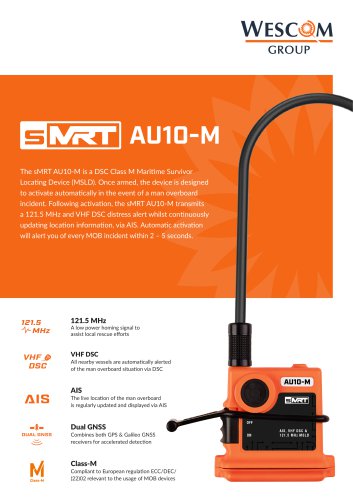
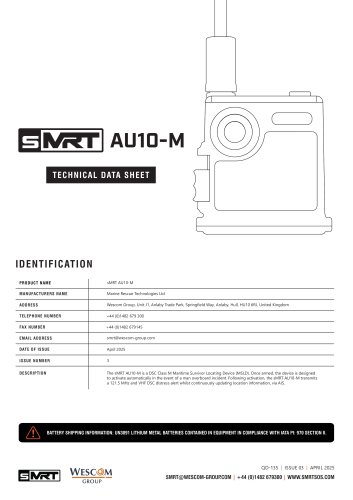
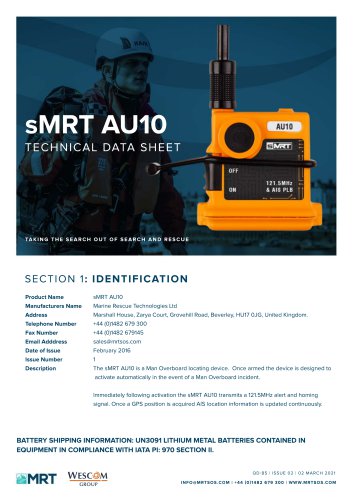
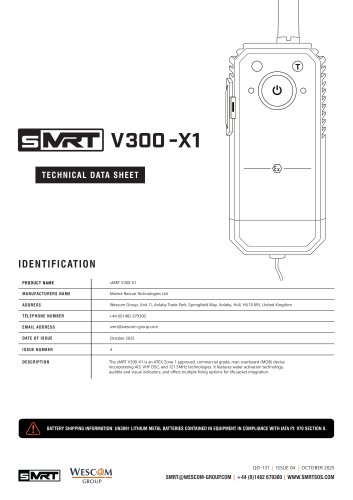
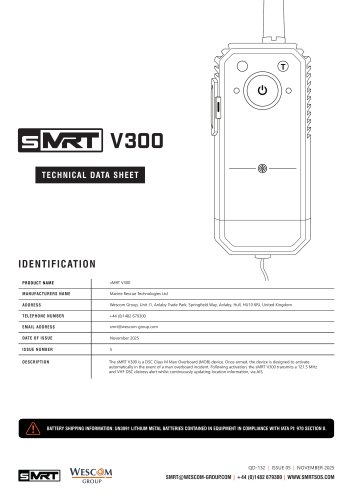
AU10-M The sMRT AU10-M is a DSC Class M Maritime Survivor Locating Device (MSLD). Once armed, the device is designed to activate automatically in the event of a man overboard incident. Following activation, the sMRT AU10-M transmits a 121.5 MHz and VHF DSC distress alert whilst continuously updating location information, via AIS. Automatic activation will alert you of every MOB incident within 2 – 5 seconds. A low power homing signal to assist local rescue efforts All nearby vessels are automatically alerted of the man overboard situation via DSC The live location of the man overboard is regularly updated and displayed via AIS Dual GNSS DUAL GNSS Combines both GPS & Galileo GNSS receivers for accelerated detection Compliant to European regulation ECC/DEC/ (22)02 relevant to the usage of MOB devices
Open the catalog to page 1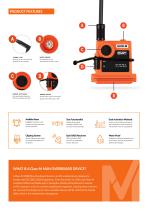
PRODUCT FEATURES C Antenna can be unscrewed and detached for easy storage AU transmissions will automatically activate in water Easy push button allows the PLB to be manually activated Arming switch, locks in and clearly displays if the PLB is ON or OFF Audible Alarm Test Functionality Dual Activation Methods Highlights activation to aid location and raise awareness of false activation Manual device safety, providing a health check on power and functionality Device can be activated manually or after immersion in water meaning it will still work if user is incapacitated Clipping System Dual GNSS...
Open the catalog to page 2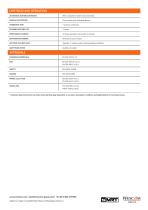
AUTOMATIC WATER ACTIVATION * Expected range derived from sea trials. Actual alerting range dependent on sea state, atmospheric conditions and height/altitude of receiving antenna. www.smrtsos.com | [email protected] | +44 (0) 1482 679300 Subject to change © Copyright Marine Rescue Technologies Ltd Issue 2 WESGSlM GROUP
Open the catalog to page 4All MRT catalogs and brochures
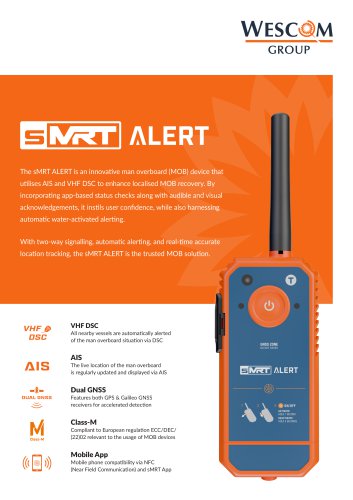 sMRT ALERT Brochure
4 Pages
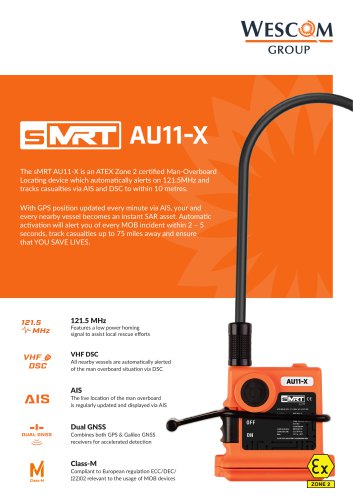 sMRT AU11-X Product Brochure
4 Pages
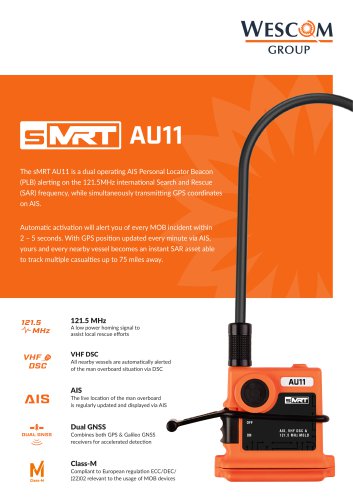 sMRT AU11 Product Brochure
4 Pages
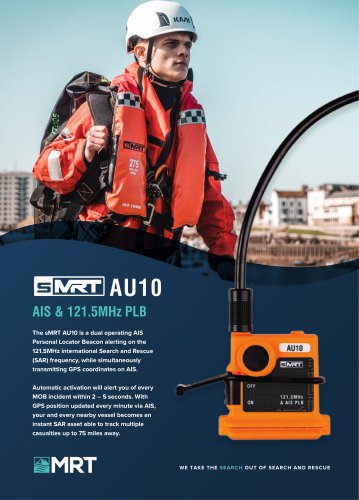 sMRT AU10 Product Brochure
2 Pages
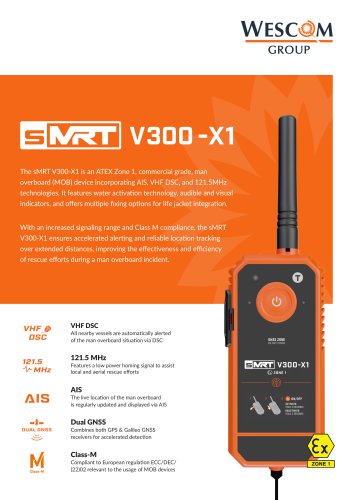 sMRT V300-X1 Brochure
4 Pages
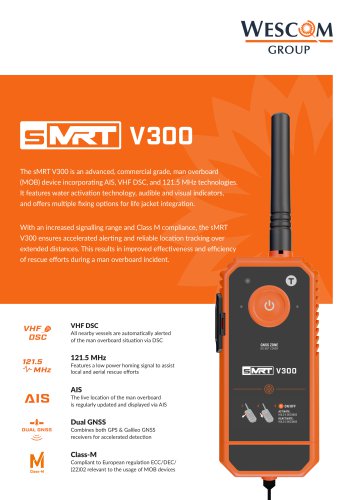 sMRT V300 Brochure
4 Pages
- Unisex life jacket
- Inflatable life jacket
- Self-inflating life jacket
- Professional life jacket
- SOLAS life jacket
- 275 N life jacket
- Orange life jacket
- Manual life jacket
- App
- Personal locator beacon (PLB)
- Black life jacket
- Boat EPIRB
- Position and tracking system
- Boat app
- Monitoring app
- GPS EPIRB
- Boat position and tracking system
- Satellite personal locator beacon (PLB)
- Category 1 EPIRB