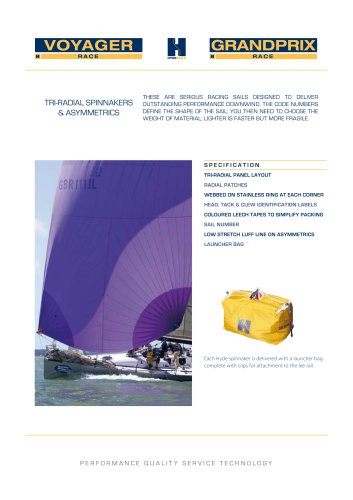
Storm Jib

Storm Jib
Storm sails are often considered emergency equipment, much like liferafts, and are frequently neglected by boat owners. However, understanding and practicing with storm sails can provide crucial control and safety during adverse weather conditions.
Importance and Functionality
Storm sails are extensions of working sails and are essential for maintaining control when conditions worsen. Modern boats, which are lighter and sportier, benefit significantly from storm sails as they allow the vessel to continue sailing effectively in rough seas.
When to Use Storm Sails
It is crucial to deploy storm sails before conditions become too severe. Waiting too long can make it dangerous to change sails, especially when sailing shorthanded. The recommended wind speed for setting storm sails on a 30-35 footer is around 40-45 knots.
Practical Tips for Storm Sails
1. Maintenance: Regularly check and maintain storm sails to prevent issues like corrosion. Use Vaseline on piston hanks and store them in plastic bags to avoid rust.
2. Rigging: Practice rigging storm sails in calm conditions to ensure familiarity. Attach sheets and tack strops in advance to facilitate quick deployment.
3. Visibility: Use bright orange sails for better visibility in rough conditions.
Case Studies
Examples from experienced sailors like Eric and Susan Hiscock and John Ridgway illustrate the importance of timely deployment of storm sails. Their experiences highlight the dangers of delaying sail changes in deteriorating weather.
Conclusion
Regular practice and familiarity with storm sails are essential for safety and control in adverse weather. Boat owners are encouraged to integrate storm sails into their regular sailing routine to ensure preparedness.
Catalog excerpts

DA Y NI CK AL LP HO TO S are your storm sails? 124 Sailing Today October 07
Open the catalog to page 1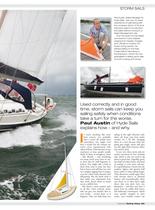
STORM SAILS Paul Austin, Sales Manager for Hyde Sails, has over 12 years' experience of sallmaklng with the company. Much of his time had been spent In production and sales before moving to a Sales Management role Over the years he has sailed and raced In many classes, ranging from Squibs, Impalas footer racing yachts. He started sailing on the East Coast before relocating to specialises In selling yacht sails for both cruising and racing Used correctly and in good time, storm sails can keep you sailing safely when conditions take a turn for the worse. Paul Austin of Hyde Sails I f you're anything...
Open the catalog to page 2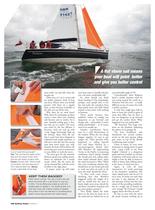
y A flat storm sail me your boat will point better and give you better control Is your trysail strong enough? tape and two layers of 9oz cloth, plus two 9oz layers of patch cloth. Centre: twin-ply cloth 100mm wide up the leech, plus 8oz tape and a 5mm Spectra leech line. Above: chunky metal slider at the head more easily 'cut and ride' when the Either way, as I see it, storm sails are useful, whatever kind of boat you have. What's more you should practise with them on a regular basis, so they become as familiar as Why then do we need them? Well, when the wind pipes up there comes a time when...
Open the catalog to page 3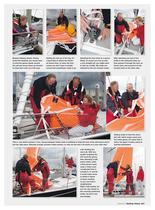
Beware flapping sheets. Having furled the headsail, you would need to wind the genoa sheets around the sail and secure them up forward to keep them well out of the way. a good idea to attach the sheets as shown here, so when the time comes you don't have to fumble Attaching the tack strop to a secure fitting. To ensure you end up with a nice straight luff, you might need to lash up a bridle. We made one around and everything's ready to go. attached to the two forward cleats. bridle to the starboard cleat, we then passed it through the tack, as shown here, and secured it to the forward cleat on...
Open the catalog to page 4
the bows is more dangerous. If your sail has hanks, you should have coated them with Vaseline and sealed them in a plastic because with sails that are stowed away for months at a time, there's a real risk luff, which makes it easy to fit over a furled genoa. On some boats there's a separate, inner stay, which makes the operation even easier. If you decide to use a luff foil, it's worth making sure that there's an alternative method of attaching it - perhaps with back-up eyelets. Inset: an external track about 6ln above deck makes everything a lot easier. You can attach the slides and lash the...
Open the catalog to page 5All Hydesails catalogs and brochures
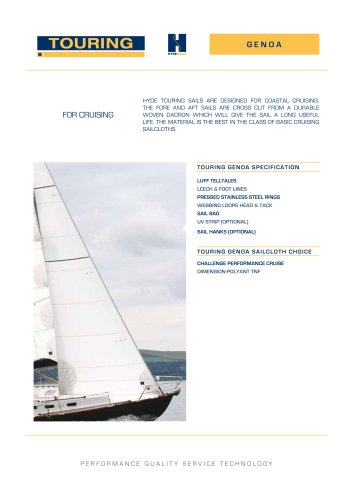 touring genoa
2 Pages
 VR+Gennaker
2 Pages
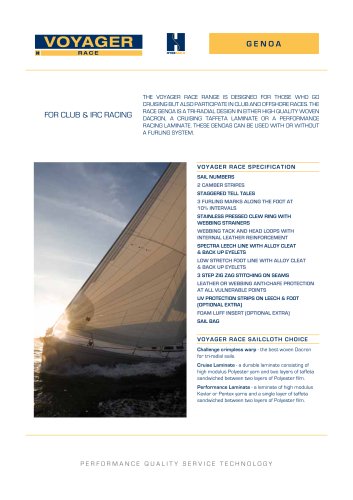 VR+Genoa
2 Pages
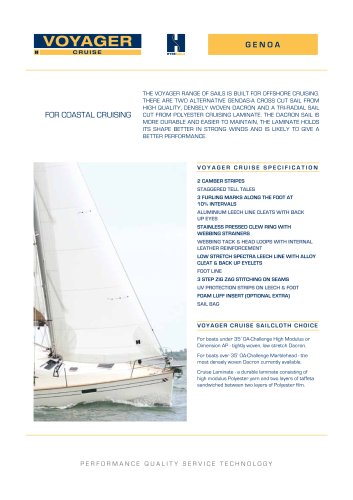 VC+Genoa
2 Pages
 VO+Genoa-1
2 Pages
 Grand Prix Headsail
2 Pages
 VO+Main
2 Pages
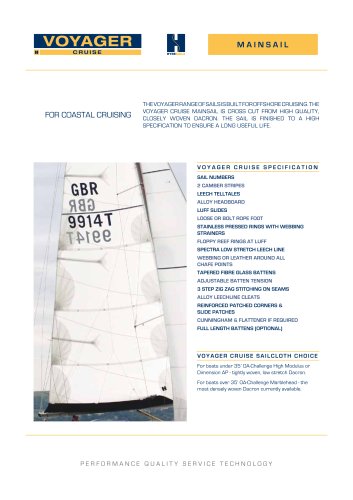 VC+Main
2 Pages
 VR+Main
2 Pages
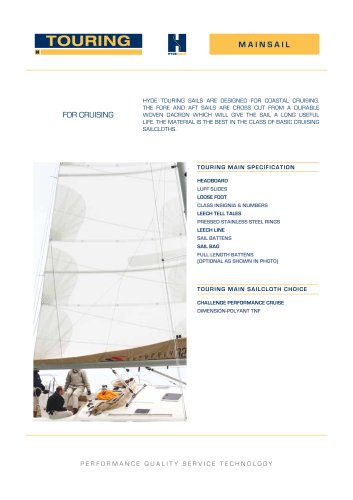 TouringMain
2 Pages
Archived catalogs
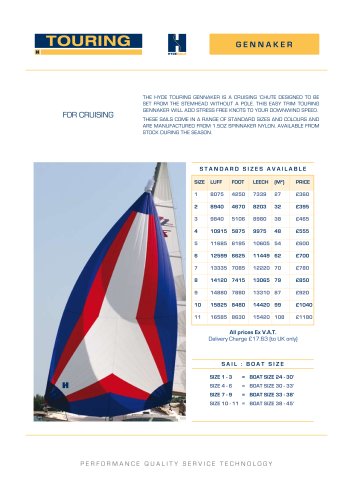 Touring Gennaker
2 Pages
 Voyager Genoa
2 Pages
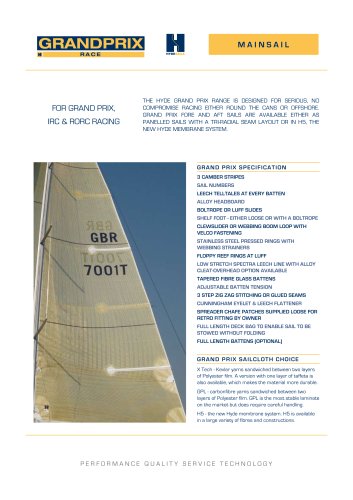 Grand Prix Mainsail
2 Pages
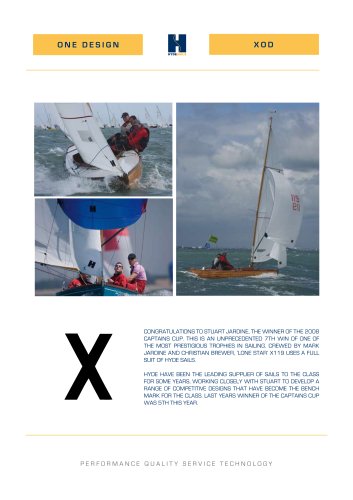 XOD
XOD2 Pages
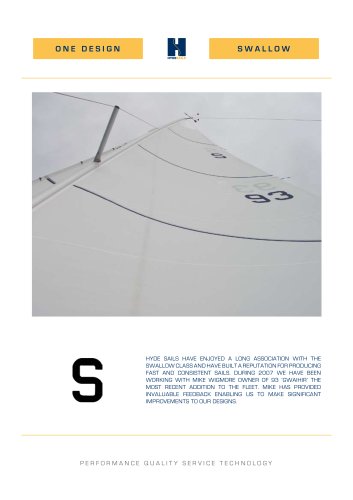 Swallow
2 Pages
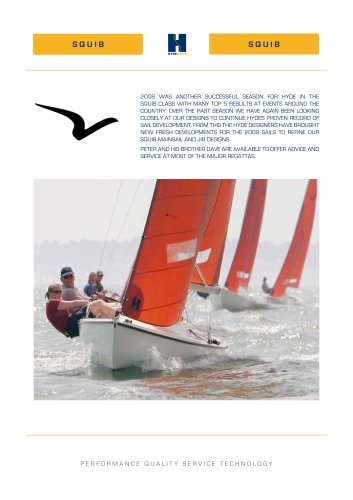 Squid
Squid2 Pages
 J80
J802 Pages
 J24
J242 Pages
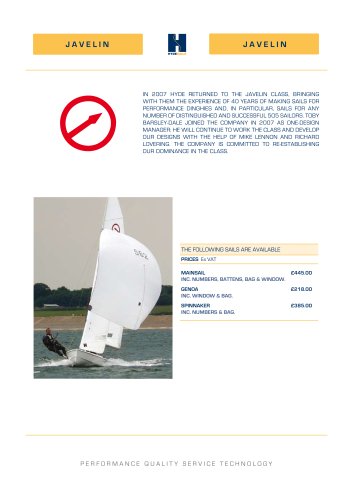 Javelin
2 Pages
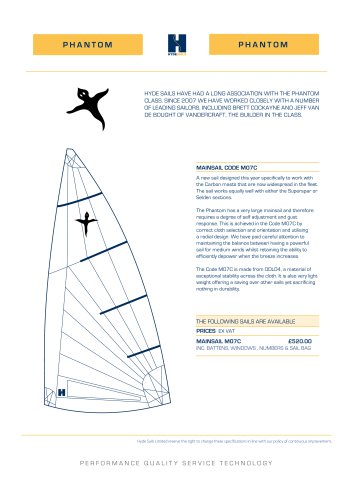 Phantom
1 Page
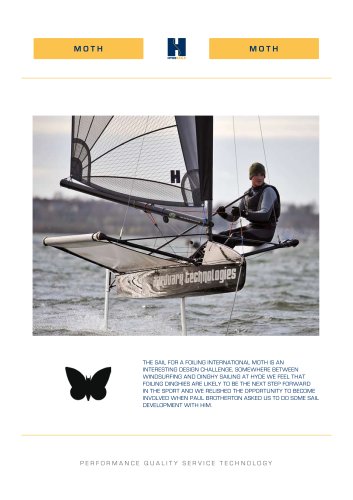 Moth
Moth2 Pages
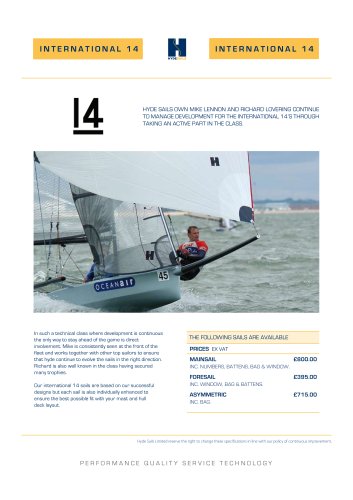 International 14
1 Page
 505
5052 Pages
 B14
B142 Pages