

- Products
- Catalogs
- News & Trends
- Exhibitions
Helios proteus webmanual

Helios proteus webmanual
Catalog excerpts

Helios, Proteus & Apollo Lighting Systems
Open the catalog to page 1
Halcyon HID & Halogen Primary Light Owner's Manual Trademark Notice Halcyon ®,Extreme Exposure®,BC Keel®,Multifunction Compensator®, ACB™, DLR™, Explorer Pro™,and Scout Light™ are registered trademarks of Halcyon Warnings, Cautions and Notes Pay special attention to information provided in warnings, cautions, and notes, that is accompanied by these icons: AA WARNING indicates a procedure or situation that, if not avoided, could result in serious injury or death to the user. A A CAUTION indicates any situation or technique that could cause damage to the product, and could subsequently result in...
Open the catalog to page 2
Halcyon Helios, Proteus & Apollo Lighting Systems Halcyon Lighting Overview 4 18w HID and Halogen Light Head Operation 8 lOw HID Light Head Operation 10 Halcyon Power Systems 13 Troubleshooting Your Halcyon Light 18 Halcyon NiMH Battery FAQ 22 Appendex 1 : System Burn Times 25 Appendex 2: Warranty Information 26 Appendex 3: Replacement Parts 27
Open the catalog to page 3
Congratulations on your purchase of a Halcyon primary light. At Halcyon we appreciate the faith your choice places in our products. Like the rest of the Halcyon line, the Helios, Proteus and Apollo lights were created out of a very real need for a lighting instrument capable of withstanding the rigorous demands of exploration diving. Formed by some of the world's leading explorers, Halcyon is dedicated to establishing a link between active underwater explorers and the manufacture of precision diving equipment. Who better than leading explorers to design and test your life support equipment? We've...
Open the catalog to page 4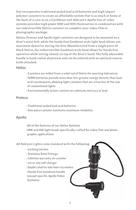
line incorporates traditional sealed lead acid batteries and high-impact polymer canisters to create an affordable system that is as much at home at the back of a cave as on a Caribbean reef. Halcyon's Apollo line of video systems provides high-power HMI and HID illumination in combination with our indestructible Delrin canisters to complete your video, film or photographic package. Helios, Proteus and Apollo light canisters are designed tobe mounted on a diver's waist belt, while the hands-free Goodman-style light head allows you maximum dexterity during the dive. Manufactured from a single...
Open the catalog to page 5
High Intensity Discharge lamps produce a brilliant white light yet draws a fraction of the power of a halogen lamp. HID has quickly become the standard for exploration-grade lighting systems. Halcyon's Helios, Proteus, and Apollo lights require very little attention beyond the care given to a halogen light. Although it produces 5% of its output when first ignited, the HID light requires a few seconds (usually 15-20) to produce full output. Also, if power to the lamp is lost or turned off (such as with an underwater pluggable cord), the arc tube must cool to a given temperature before the arc...
Open the catalog to page 6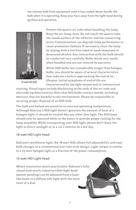
not remove bulb from equipment until it has cooled. Never handle the bulb when it is operating. Keep your face away from the light head during Protect the quartz arc tube when handling the lamp. Keep the arc lamp clean. Do not touch the quartz tube, the inside surface of the reflector and the connecting wires. Contamination can degrade lamp performance or cause premature failures. If necessary, clean the lamp by wiping with a lint-free towel or swab immersed in denatured alcohol. Any interaction with the bulb should be conducted very carefully. Bulbs break very easily when handled and are not...
Open the catalog to page 7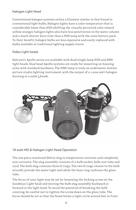
Halogen Light Head Conventional halogen systems utilize a filament similar to that found in conventional light bulbs. Halogen lights have a color temperature that is considerably lower than HID (shifting the visually perceived color toward yellow-orange); halogen lights also have less penetration in the water column and a much shorter burn time than a HID lamp with the same battery pack. To their benefit, halogen bulbs are less expensive and easily replaced with bulbs available at traditional lighting supply stores. Video Light heads Halcyon's Apollo series are available with dual/single lamp...
Open the catalog to page 8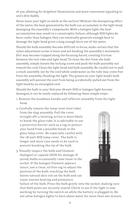
of you, allowing for brightest illumination and more convenient signaling to one's dive buddy. Never leave your light on while at the surface! Without the dissipating effect of the water, the heat generated by the bulb can accumulate in the light head, damaging the assembly's components. With a halogen light, the heat accumulation may result in a catastrophic failure; although HID lights do burn cooler than halogen, they can eventually generate enough heat to damage the light head given a long enough burn out of the water. Should the bulb assembly become difficult to focus, make certain that...
Open the catalog to page 9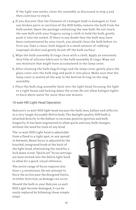
If the light now works, clean the assembly as discussed in step 5 and then continue to step 6. 4. If you discover that the filament of a halogen bulb is damaged, or find any broken parts or sections of the HID bulbs, remove the bulb from the bulb socket. Open the package containing the new bulb. Do not touch the new bulb with your fingers; using a cloth to hold the bulb, gently push it into the socket. If there is any doubt that the bulb may have been contaminated by your touch, you should clean the bulb before its first use. Take a clean cloth dipped in a small amount of rubbing/ isopropyl alcohol...
Open the catalog to page 10
i. Replace the bulb by removing the knurled lens retaining ring at the front of the light head. Simply unscrew the ring counterclockwise to 2. Remove the lens. The reflector and bushings should spring up so it can be removed. Remove the spring to access the bulb. 3. Install the new bulb and reverse the procedure to reassemble the light head. Make sure to clean all appropriate parts before re-installing. Be careful during reinstallation to ensure that the reflector and bushing are tightly seated - the lens should sit flat against the O-ring. 4. Test for leakage in a vessel of water before diving....
Open the catalog to page 11
itself to be a common problem, you should be aware of the potential risk by not allowing the canister to sit over time with discharged batteries sealed Light Canister The light canister must keep the battery dry and protected while you are diving at depth. Halcyon lights use two locking latches to secure the lid to the canister. When opening or closing your light, work both latches simultaneously to avoid stressing any side of the lid unevenly. The canister is configured for attaching to the diver's waist belt. The unique three-fold webbing attachment on your Halcyon Light is held in place by...
Open the catalog to page 12All HALCYON catalogs and brochures
 Product Guide
48 Pages
 Springheel Halcyon
2 Pages
 Halcyon tankbands
2 Pages
 Halcyon inflator
8 Pages
 explorer proteus manual 2008
28 Pages
 streamline pvalve 08web
12 Pages
 Explorer Eos manual 2010
28 Pages
 Halcyon Regulators 2010
16 Pages
 Halcyon BC2009
24 Pages