
- Catalogs
- Ezzy Sails 2
- TAKA3 2017

TAKA3 2017

TAKA3 2017
The document discusses the development and features of the Taka-3 wave sail by Ezzy, highlighting its design improvements and performance benefits.
Design and Development
The Taka-3 wave sail is the result of extensive testing and refinement, influenced by both scientific methods and over 35 years of experience in wave sail manufacturing. The development process involved creating multiple prototypes to identify and eliminate design flaws, ultimately leading to a sail that maintains the 'taka' tradition of being lightweight and easy to depower.
Technical Specifications
The Taka-3 features a strategically placed scrim luff panel, providing a softer and more forgiving feel. It is designed to perform exceptionally well in strong winds, offering a smooth and stable ride without flutter or draft movement.
Performance Advantages
A key differentiator of the Taka-3 is its impressive low-end power, allowing it to perform like a larger sail while maintaining the control of a smaller one. This is achieved by setting the downhaul to 'min 2' using a calibrated gauge and utilizing the shortest outhaul guide cord.
Wave Riding Dynamics
The sail's profile adjusts during wave riding, luffing when sheeting out to reduce power during cutbacks and regaining power during bottom turns. This dynamic adjustment enhances wave riding performance.
Manufacturing Process
The Taka-3 is meticulously crafted in Ezzy's own factory, where each sail is cut, sewn, rigged, and calibrated before being thoroughly inspected.
Size Specifications
The document provides detailed size specifications for the Taka-3, including luff, boom, and mast measurements for various sail sizes ranging from 3.4 m² to 5.3 m².
Conclusion
The Taka-3 is positioned as an ideal choice for serious wave riders, offering a combination of power, control, and dynamic performance.
Catalog excerpts

If You Are Serious About Wave Riding... On Maui is a shed full of Taka-3 prototypes that we will neither sell nor sail. Influenced by both the scientific method and the intuition gained after 35 years of making wave sails, we tested and tested and re-tested tweaked versions of last year's sail trying to make it better. A bad prototype taught us what not to do. And we followed the ones that felt great until we had a sail worthy enough to carry on the “taka” tradition of being a lightweight, easy-to-depower, 3-batten wave sail. We called it the Taka-3. The most obvious of the technical changes made to the Taka-3 is the strategically placed scrim luff panel for a softer, more forgiving feel. “Oh behave, baby!” The Taka-3 does just that in strong wind: no flutter, no movement of draft--just a well behaved, super smooth ride. But what really sets the Taka-3 apart from any other sail is the awesome low-end. We found ourselves moving around on the 4.5 when other sailors were sinking on 5.3's. Just set the downhaul to the “min 2” with our calibrated downhaul gauge and use the shortest outhaul guide cord to make the Taka-3 ride like a sail one or two sizes bigger. You get the power of a larger sail with the control of a smaller sail. What more could you ask of a wave sail? Funny you should ask... We did too, and we focused our R&D on finding just the right amount the profile should adjust during wave riding. The Taka-3 luffs when you sheet out, so you can smoothly kill the power in a cutback and push harder on your board. When you drive into your next bottom turn, the Taka comes back to life with power. We meticulously cut, stick, and sew the Taka-3 in our very own factory. After sewing, we rig, calibrate the downhaul gauge, and thoroughly check every sail before we slip it in the bag. If you are as serious about wave riding as we are about making wave sails, the Taka-3 is for you.
Open the catalog to page 1All Ezzy Sails 2 catalogs and brochures
 2018 Taka 4 Catalog
1 Page
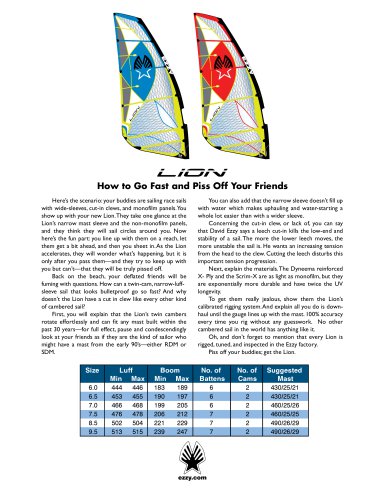 2018 Lion Catalog
1 Page
 ZETA 2018
1 Page
 2017 Zeta Catalog
1 Page
 2015 taka
1 Page
 2015_legacy
1 Page
 2015_lion
1 Page
 2016_elite
1 Page
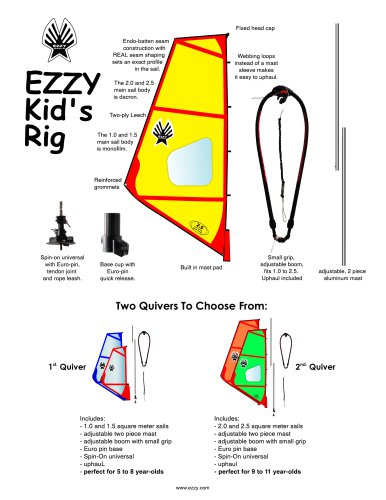 kids_rig2013
1 Page
 2015 elite catalog
1 Page
 2016 lion catalog
1 Page
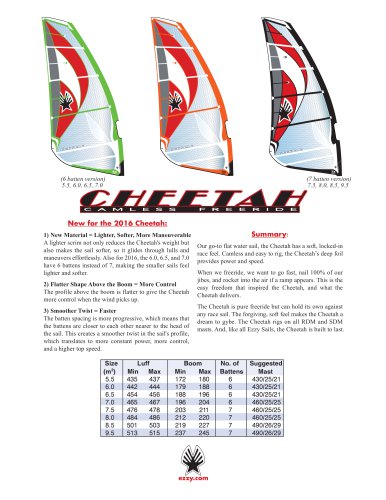 2016 cheetah catalog
1 Page
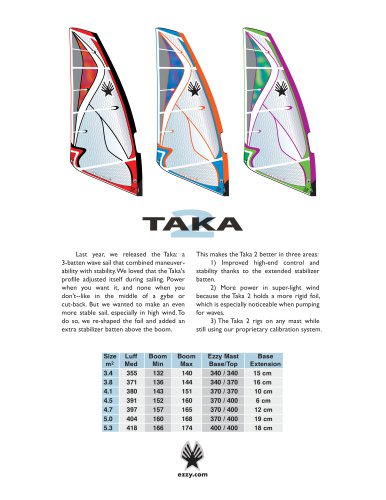 2016 taka2 catalog
1 Page
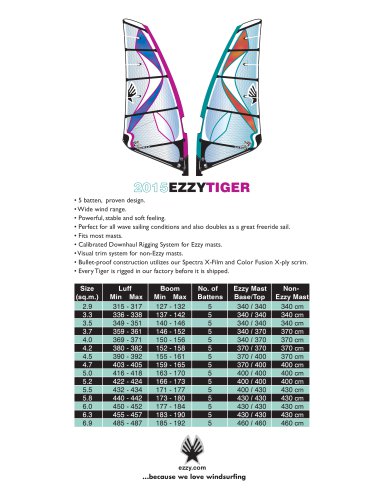 2016_tiger_catalog
1 Page
 2014 lion catalog
1 Page
 2014 legacy catalog
1 Page
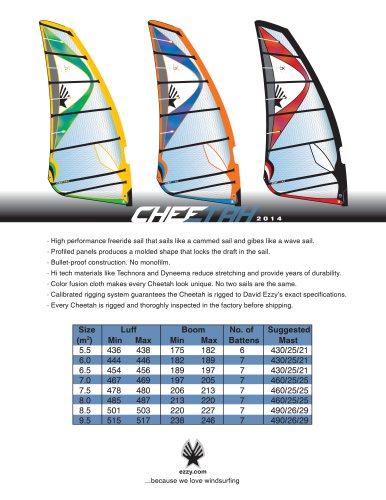 2014 cheetah catalog
1 Page
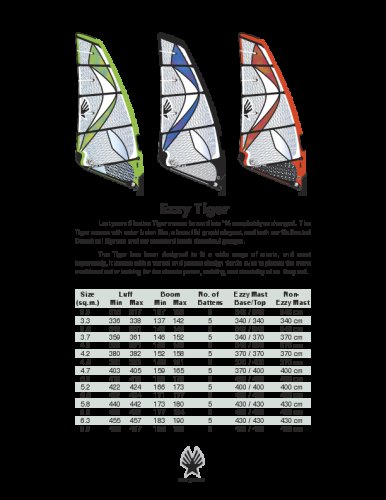 2014 tiger catalog
1 Page
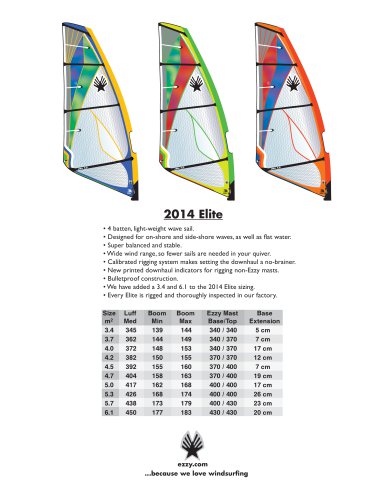 2014 elite catalog
1 Page
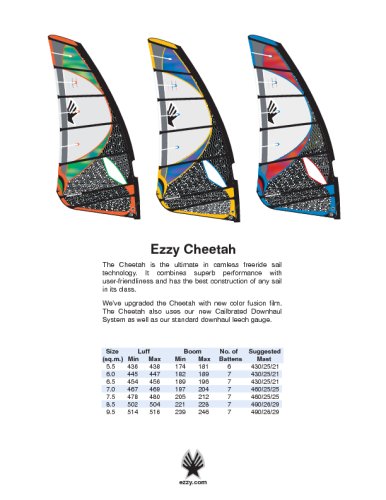 2013 cheetah
1 Page
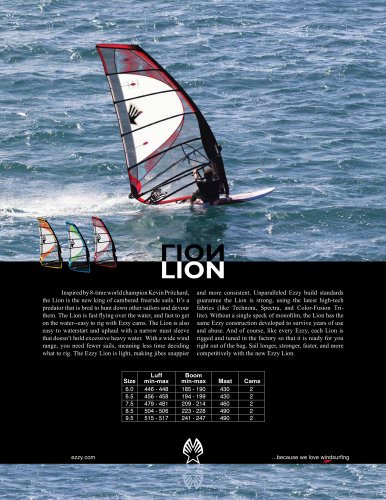 2013 lion
1 Page
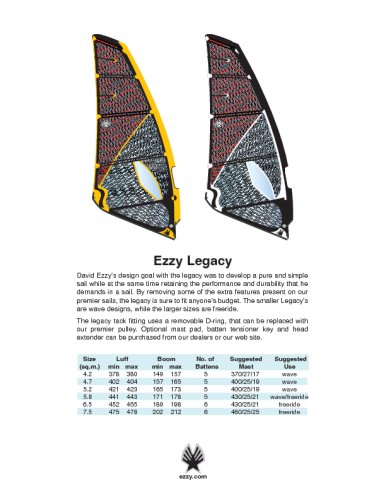 2013 legacy
1 Page
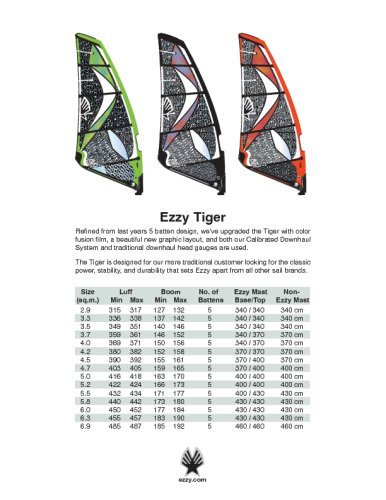 2013 TIGER
1 Page
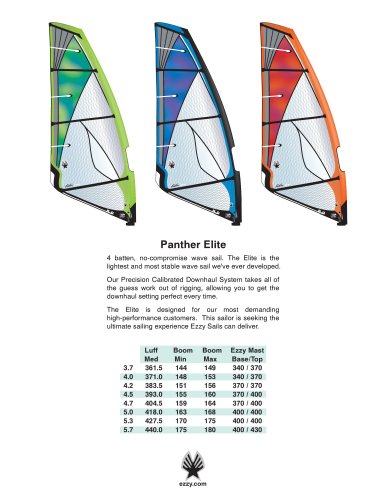 2013 Panther Elite
1 Page
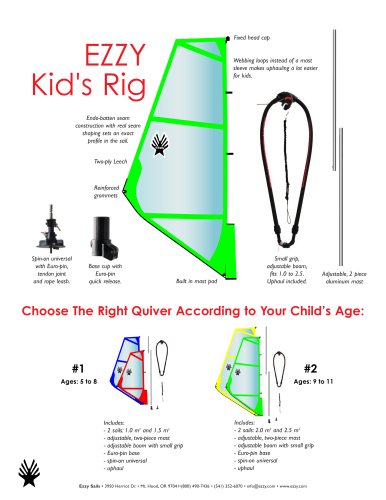 KIDS RIG 2011
1 Page
 FREERIDE 5 BROCHURE 2011
1 Page
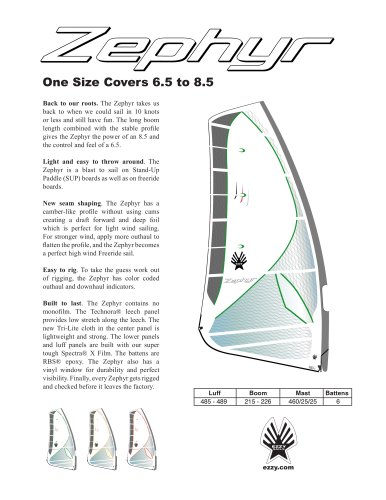 ZEPHYR 2011
1 Page
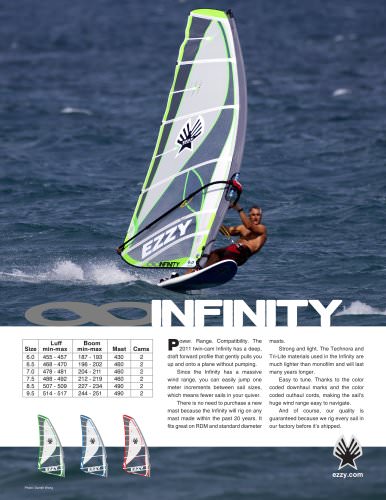 INFINITY 2011
1 Page
 WAVE PANTHER 3 2011
1 Page
 Sails brochure
5 Pages


Archived catalogs
 2008 EZZY Freeride Tuning
2 Pages
 2008 EZZY Wave SE Tuning
2 Pages
 EZZY Wave SE Tuning
2 Pages
- Windsurf sail
- Duffle bag
- Carbon mast
- Multi-use duffle bag
- Wave windsurf sail
- 4-batten windsurf sail
- Windsurf mast
- Freeride windsurf sail
- 7-batten windsurf sail
- 5-batten windsurf sail
- Watersports duffle bag
- 6-batten windsurf sail
- Race windsurf sail
- Speed windsurf sail
- Complete rig pack
- Windsurfing complete rig pack
- Wave mast
- 3-batten windsurf sail
- All-around windsurf sail