- Catalogs
- Corvus Energy Lithium Polymer Energy Storage
- Corvus Pelican Fuel Cell System

Corvus Pelican Fuel Cell System
Corvus Pelican Fuel Cell System
Catalog excerpts
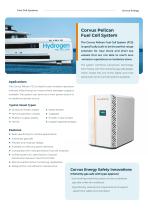
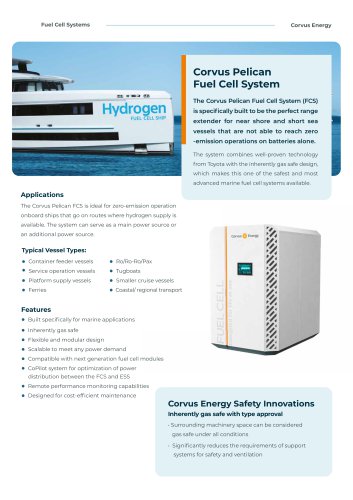
Fuel Cell Systems Corvus Energy Corvus Pelican Fuel Cell System The Corvus Pelican Fuel Cell System (FCS) is specifically built to be the perfect range extender for near shore and short sea vessels that are not able to reach zero -emission operations on batteries alone. The system combines well-proven technology from Toyota with the inherently gas safe design, which makes this one of the safest and most advanced marine fuel cell systems available. Applications The Corvus Pelican FCS is ideal for zero-emission operation onboard ships that go on routes where hydrogen supply is available. The system can serve as a main power source or an additional power source. Typical Vessel Types: • Container feeder vessels • Service operation vessels • Platform supply vessels • Ferries • Ro/Ro-Ro/Pax • Tugboats • Smaller cruise vessels • Coastal/ regional transport • Built specifically for marine applications • Inherently gas safe • Flexible and modular design • Scalable to meet any power demand • Compatible with next generation fuel cell modules • CoPilot system for optimization of power distribution between the FCS and ESS • Remote performance monitoring capabilities • Designed for cost-efficient maintenance Corvus Energy Safety Innovations Inherently gas safe with type approval • Surrounding machinery space can be considered gas safe under all conditions • Significantly reduces the requirements of support s
Open the catalog to page 1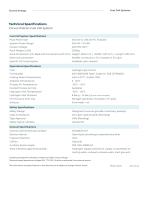
Fuel Cell Systems Corvus Energy Technical Specifications Corvus Pelican Fuel Cell System Fuel Cell System Specifications Pack Power Size System Power Range Output Voltage Pack Dimensions, incl. Base and Connections (±10 mm) Height: 2320 mm | Width: 1427 mm | Length: 2159 mm Electrical Connection Parallel connection 4 FC modules in FC pack Available upon request Operational Specifications Fuel Fuel Quality Cooling Water Temperature Ambient Temperature Ducted Process Air Inlet Hydrogen Inlet Temperature Hydrogen Inlet Pressure 8 bar.g – 14 bar.g (Lower upon request) Nitrogen generator included...
Open the catalog to page 2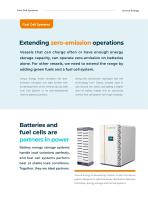
Fuel Cell Systems Corvus Energy Fuel Cell Systems Extending zero-emission operations Vessels that can charge often or have enough energy storage capacity, can operate zero-emission on batteries alone. For other vessels, we need to extend the range by adding green fuels and a fuel cell system. Corvus Energy drives innovation for zero- Using the well-proven hydrogen fuel cell emission transport one step further with technology from Toyota, already used in its development of the Inherently Gas Safe cars around the world, and adding a higher Fuel Cell System to its well-established level of safety,...
Open the catalog to page 3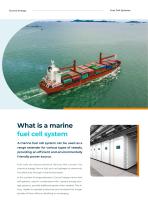
Corvus Energy What is a marine fuel cell system A marine fuel cell system can be used as a range extender for various types of vessels, providing an efficient and environmentally friendly power source. Fuel cells are electrochemical devices that convert the chemical energy from a fuel, such as hydrogen or ammonia, into electricity through a chemical process. In the context of range extension, Corvus Energy marine fuel cell systems, used in combination with battery energy storage systems, provide additional power when needed. This allows vessels to operate producing zero-emissions for longer periods...
Open the catalog to page 4All Corvus Energy Lithium Polymer Energy Storage catalogs and brochures
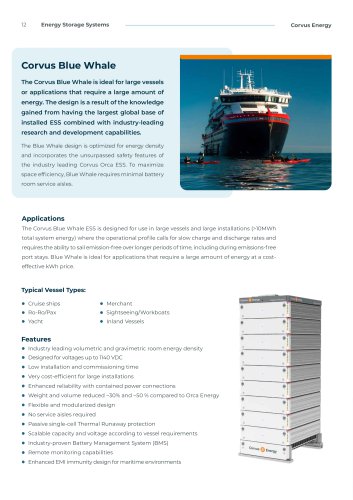 Corvus Blue Whale
2 Pages
 Corvus Orca
2 Pages