

410C

410C
1.1 General: The Albemarle 41 Convertible has twin diesel inboard engines, with a manufacturer's manual for care and operation. Warranty registration is crucial.
1.2 Drive Systems: Inboard propulsion systems have components inside the hull, with propeller shafts underwater. Regular checks of transmission oil or fluid levels are necessary.
1.3 Engine Exhaust System: The exhaust system includes manifolds, hoses, mufflers, and fittings, requiring regular inspections for leaks or heat deterioration.
Catalog excerpts
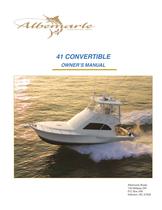
OWNER'S MANUAL Albemarle Boats
Open the catalog to page 1
THIS PAGE WAS LEFT BLANK
Open the catalog to page 2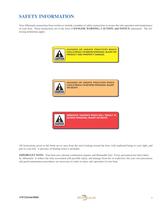
SAFETY INFORMATION Your Albemarle manual has been written to include a number of safety instructions to assure the safe operation and maintenance of your boat. These instructions are in the form of DANGER, WARNING, CAUTION, and NOTICE statements. The fol- lowing definitions apply: HAZARDS OR UNSAFE PRACTICES WHICH COULD RESULT IN MINOR PERSONAL INJURY OR PRODUCT AND PROPERTY DAMAGE. HAZARDS OR UNSAFE PRACTICES WHICH COULD RESULT IN SEVERE PERSONAL INJURY All instructions given in this book are as seen from the stern looking toward the bow, with starboard being to your right, and port to your...
Open the catalog to page 3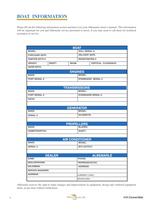
BOAT INFORMATION Please fill out the following information section and leave it in your Albemarle owner's manual. This information will be important for you and Albemarle service personnel to know, if you may need to call them for technical Albemarle reserves the right to make changes and improvements in equipment, design and vendored equipment items, at any time without notification.
Open the catalog to page 4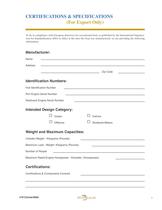
CERTIFICATIONS & SPECIFICATIONS To be in compliance with European directives for recreational boats as published by the International Organiza- tion for Standardization (ISO) in effect at the time this boat was manufactured, we are providing the following Identification Numbers: Hull Identification Number _ Port Engine Serial Number _ Starboard Engine Serial Number Intended Design Category: Weight and Maximum Capacities: Unladen Weight - Kilograms (Pounds) _ Maximum Load - Weight- Kilograms (Pounds) _ Maximum Rated Engine Horsepower - Kilowatts (Horsepower) Certifications & Components Covered...
Open the catalog to page 5
THIS PAGE WAS LEFT BLANK
Open the catalog to page 6
IMPORTANT INFORMATION AU instructions given in this book are as seen from the stern looking toward the bow with starboard being to your right, and port to your left. The information and precautions listed in this manual are not all inclusive. It may be general in nature in some cases and detailed in others. The suppliers of some of the major components such as engines, pumps, and appli- ances, provide their own owner's manuals which have been included with your boat. You should read the information in this manual and the manuals of other suppliers completely and have a thorough understanding...
Open the catalog to page 7
THIS PAGE WAS LEFT BLANK
Open the catalog to page 8
OWNER'S / OPERATOR'S INFORMATION Federal law requires that all undocumented vessels equipped with propulsion machinery be registered in the State of principal use. A certificate of number will be issued upon registering the boat. These numbers must be displayed on your boat. The owner/operator of a boat must carry a valid certificate of number whenever the boat is in use. When moved to a new State of principal use, the certificate is valid for 60 days. In order to be valid, the numbers must be installed to the proper specifications. Check with your dealer or state boat- ing authority for numbering...
Open the catalog to page 9
THIS PAGE WAS LEFT BLANK
Open the catalog to page 10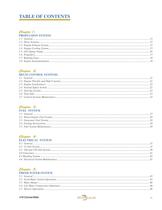
PROPULSION SYSTEM HELM CONTROL SYSTEMS FUEL SYSTEM ELECTRICAL SYSTEM FRESH WATER SYSTEM
Open the catalog to page 11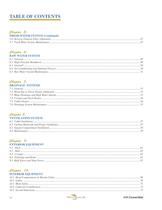
FRESH WATER SYSTEM (Continued) DRAINAGE SYSTEMS VENTILATION SYSTEM EXTERIOR EQUIPMENT INTERIOR EQUIPMENT
Open the catalog to page 12
INTERIOR EQUIPMENT SAFETY EQUIPMENT ROUTINE MAINTENANCE
Open the catalog to page 13
PROPULSION SYSTEM The Albemarle 41 Convertible is designed to be powered with twin diesel inboard engines. Each manufacturer of the various marine power components provides an owner's information manual with their product. It is important that you read the manuals very carefully and become familiar with the proper care and operation of the engines and drive system. A warranty registration card has been furnished with each new engine and can be located in the engine owner's manual. All information requested on this card should be filled out completely by the dealer and purchaser and then returned...
Open the catalog to page 15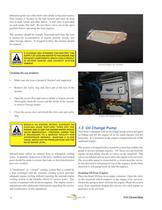
Inboard engines use a thru-hull water intake scoop and strainer. This strainer is located on the hull bottom and must be kept free of mud, weeds and other debris. A ball valve is provided on each intake thru-hull. Be sure these valves are in the open position before operating the boat engines. The strainers should be visually inspected each time the boat is hauled for accumulation of marine growth, weeds, and other foreign objects. If clogged or dirty, the strainer should A CLOGGED SEA STRAINER CAN RESTRICT THE SUPPLY OF COOLING WATERTOTHE ENGINE AND EXHAUST COMPONENTS, WHICH COULD RESULT IN...
Open the catalog to page 16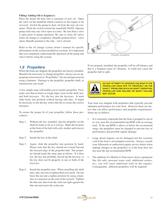
Filling/ Adding Oil to Engine(s): Place the drain/ fill hose into a container of new oil. Open the valve on the manifold which connects to the engine to be serviced. Switch the pump to draw oil from the new oil con- tainer. (Push the switch toward the manifold) NOTE: Operate pump with only one valve open at a time. Be sure that a valve is open prior to pump operation. Be sure to close all valves when oil change is completed. (Handle pointed down - valve open) (Handle pointed to the side - valve closed) Refer to the oil change system owner's manual for specific information on the system installed...
Open the catalog to page 17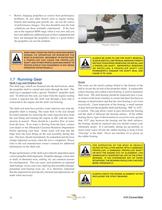
Before changing propellers to correct boat performance problems, be sure other factors such as engine tuning, bottom and running gear growth, etc., are not the source of performance changes. You also should be sure the load conditions are those normally experienced. If the boat ran in the required RPM range when it was new and you have not added any additional gear or heavy equipment and have not damaged the propellers, there is a good chance Propeller Shaft Seal KEEP AWAY FROMTHE PROPULSION MACHINERY DURING ITS OPERATION OR WHENEVER THE BOAT IS IN MOTION. MOVEMENT OF WATER PAST A PROPELLER CAN...
Open the catalog to page 18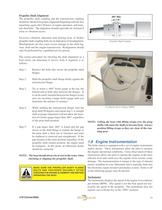
Propeller Shaft Alignment The propeller shaft coupling and the transmission coupling should be checked for proper alignment beginning with the first launching, again after 20 hours of engine operation, and annu- ally thereafter. The alignment should especially be checked if noise or vibration occurs. Excessive vibration, abnormal strut bearing wear, or broken propeller shaft coupling bolts are an indication of misalignment. Misalignment can also cause severe damage to the shaft log, strut, shaft and the engine transmission. Realignment should only be performed by a qualified service person. The...
Open the catalog to page 19All Albemarle catalogs and brochures
 2017 ALBEMARLE BROCHURE
27 Pages
 AB-Catalog
48 Pages
 ALBEMARLE 330 XF
3 Pages
 360 XF IPS
1 Page
Archived catalogs

- Nautical motor-boat
- Inboard express cruiser
- Twin-engine express cruiser
- Cabin cruiser
- Outboard express cruiser
- Outboard cabin cruiser
- Flybridge express cruiser
- 4-berth express cruiser
- Fishing express cruiser
- Hard-top cabin cruiser
- Sport-fishing express cruiser
- Fishing cabin cruiser
- Sport-fishing cabin cruiser
- Twin-engine cabin cruiser
- Twin-berth express cruiser
- Twin-berth cabin cruiser
- 5-berth express cruiser
- Convertible express cruiser