


Cleaner C596 Primers

Cleaner C596 Primers
3M™ Adhesion Promoter AP596 and Primers P590, P591, P592, P595, and P597 are low viscosity adhesion promoters designed for use with 3M™ Polyurethane and Hybrid Adhesives/Sealants. They enhance bonding on materials like glass, acrylic, and polycarbonate.
Technical Data
The document provides typical technical data, including viscosity, solids percentage, VOC content, and active ingredients for each primer. For example, AP596 is clear with a water-thin viscosity and contains silane/ethanol.
Performance Data
Adhesion strength tests show significant improvement when using primers. For instance, acrylic with P591 showed a max load at failure of 474 psi compared to 107 psi without primer.
Primer Selection Chart
Recommendations for primer use based on substrate type are provided. For example, P595 is best for tinted glass, while P591 is recommended for polycarbonate.
Directions for Use
Surface preparation involves cleaning and abrading substrates. Primers should be applied with a wool dauber, and surfaces must be dry and free from contaminants. Specific drying times are noted for each primer.
Application Equipment
Wool daubers are recommended for primer application to avoid voids in the coating.
Storage and Shelf Life
Products should be stored below 77°F (25°C) in original containers. AP596 has a shelf life of 12 months, while primers must be used within 7 days after opening.
Technical Information and Warranty
3M provides technical information based on reliable tests but does not guarantee accuracy. Users are responsible for determining product suitability. A limited warranty is offered, with replacement or refund as remedies.
ISO Certification
The product is manufactured under a 3M quality system registered to ISO 9001:2008 standards.
Catalog excerpts

Adhesion Promoter/Primer 3M™ Adhesion Promoter AP596 3M™ Fritted Glass Primer P590 3M™ Plastic Primer P591 3M™ Metal Primer P592 3M™ Teak & Glass Primer P595 3M™ Teak & Glass Primer P597, Clear Technical Data Product Description 3M™ Adhesion Promoter AP596 and 3M™ Primers P590, P591, P592, P595 and P597 are low viscosity adhesion promoters recommended for use with the 3M™ 500-Series Polyurethane Adhesives/Sealants and 3M™ 700-Series Hybrid Adhesives/Sealants, as well as the 3M™ OEM Polyurethane Glass Adhesive Sealant 590. 3M Adhesion Promoter and Primers are applied to a wide variety of materials including glass, acrylic / PMMA, polycarbonate, and many other materials prior to adhesive/sealant use to assist in bonding. Note: The following technical information and data should be considered representative or typical only and should not be used for specification purposes. Technical Data 3M™ Adhesion Promoter AP596 Color Viscosity 3M™ Fritted Glass Primer P590 3M™ Teak & Glass Primer P595 3M™ Teak & Glass Primer P597, Clear Water Thin Water Thin 12 - 15 seconds 12 - 15 seconds (DIN Cup) (Ford Cup) Silane / Ethanol Silane / Ethanol Active Ingredient
Open the catalog to page 1
3M™ Adhesion Promoter/Primer • Adhesion Promoter AP596 • Fritted Glass Primer P590 • Plastic Primer P591 • Metal Primer P592 • Teak & Glass Primer P595 • Teak & Glass Primer P597, Clear Performance Data The following table shows the impact in terms of adhesion strength of bonding common window substrates with and without 3M™ Adhesion Promoter AP596 / 3M™ Primer. 3M™ OEM Polyurethane Glass Adhesive Sealant 590 was used for this test. Note: The following data represents the overlap shear results of a 17 mil bond line. All substrates were abraded and solvent wiped prior to bonding, then cured for...
Open the catalog to page 2
3M™ Adhesion Promoter/Primer • Adhesion Promoter AP596 • Fritted Glass Primer P590 • Plastic Primer P591 • Metal Primer P592 • Teak & Glass Primer P595 • Teak & Glass Primer P597, Clear Directions for Use Surface Preparation: Surfaces to be sealed or bonded should be clean and dry. Surfaces should be free from grease, mold release, oil, water/condensation, and other contaminants that may affect the adhesion of the sealant. Abrading with 180 to 220 grit abrasive followed by a solvent wipe will improve the bond strength. Suitable solvents include 3M™ Adhesive Remover, methyl ethyl ketone (MEK),...
Open the catalog to page 3
3M™ Adhesion Promoter/Primer • Adhesion Promoter AP596 • Fritted Glass Primer P590 • Plastic Primer P591 • Metal Primer P592 • Teak & Glass Primer P595 • Teak & Glass Primer P597, Clear Directions for Use (continued) Apply 3M™ Adhesion Promoter AP596 to both substrates: Pour 3M AP596 Adhesion Promoter onto a soft lint-free cloth folded in quarters. Wipe the bonding area, flipping the cloth at regular intervals to reveal a clean section. With a new clean folded cloth, wipe off the 3M AP596 Adhesion Promoter in the same manner, flipping the cloth at regular intervals to reveal a clean section....
Open the catalog to page 4
3M™ Adhesion Promoter/Primer • Adhesion Promoter AP596 • Fritted Glass Primer P590 • Plastic Primer P591 • Metal Primer P592 • Teak & Glass Primer P595 • Teak & Glass Primer P597, Clear Technical Information The technical information, recommendations and other statements contained in this document are based upon tests or experience that 3M believes are reliable, but the accuracy or completeness of such information is not guaranteed. Many factors beyond 3M’s control and uniquely within user’s knowledge and control can affect the use and performance of a 3M product in a particular application....
Open the catalog to page 5All 3M catalogs and brochures
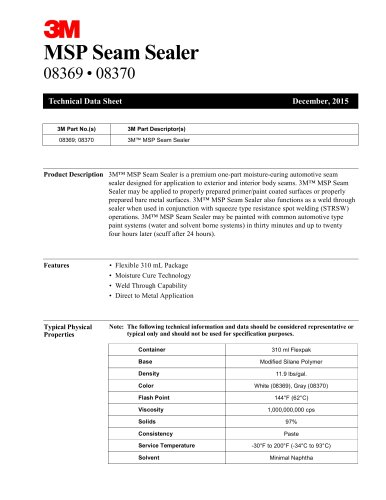 MSP Seam Sealer
4 Pages
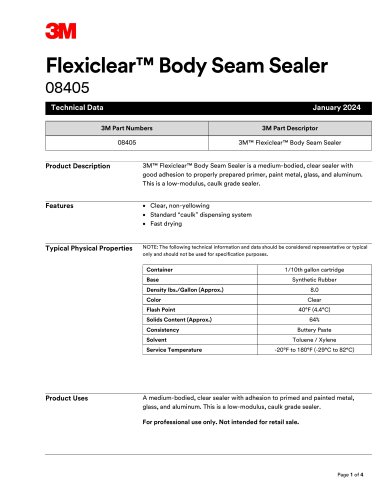 Flexiclear™ Body Seam Sealer
4 Pages
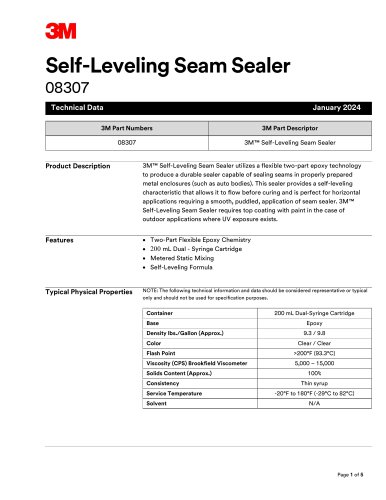 Self-Leveling Seam Sealer
5 Pages
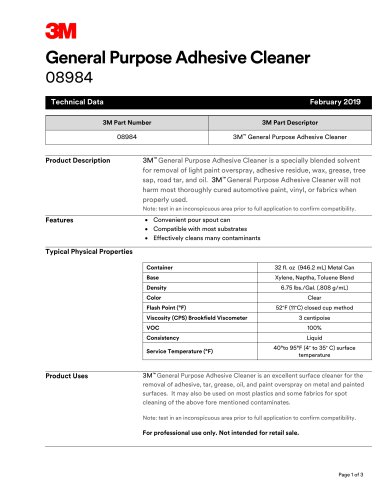 General Purpose Adhesive Cleaner
3 Pages
Archived catalogs
 3M? Marine Catalog
164 Pages
 700 Series Hybird Products
5 Pages
 3M Collision Repair Solutions
28 Pages
 Boat Care & Repair
100 Pages
 Elite Series
8 Pages
 3M™ Clear Auto Sealer
13 Pages
 3M™ Palm Buffer 28769
2 Pages
 Adhesive Sealant 5200
13 Pages
 3M™ Power Tools and Accessories
44 Pages
 Engineered Metalworking Solutions
131 Pages
 3M Fillers, Putties & Glazes
4 Pages
 3MTM Precision Masking Tape
2 Pages
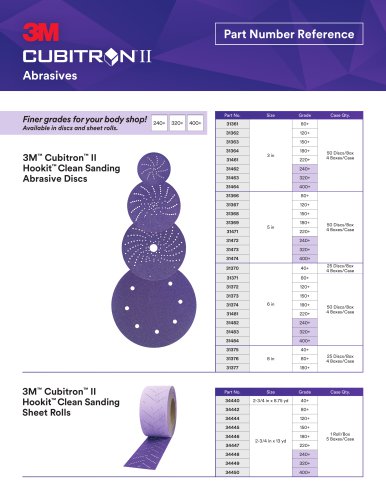
 3M™ Cubitron™ II
2 Pages
 Platinum™ Plus
4 Pages
 3M™ Specialty Adhesive Remover
17 Pages
 Flexible Foam
4 Pages
 3M™ Detailing Products Brochure
21 Pages
 Aluminum Repair SOP brochure
4 Pages
 MSP Seam Sealer
4 Pages
 3M™ Marine Adhesive Sealant
4 Pages
 Self-Leveling Seam Sealer
4 Pages
 troubleshooter
2 Pages
 Sharpshooter?
2 Pages




- Boat cleaner
- Shipyard gun
- Multi-surface cleaner
- Multi-use adhesive
- Hull cleaner
- Shipyard sander
- Spraying gun
- Metal cleaner
- Pneumatic sander
- Two-component adhesive
- Two-component filler
- Repair filler
- Bridge cleaner
- Epoxy adhesive
- Degreasing cleaner
- Shipyard grinder
- Shipyard cutting tool
- Fiberglass cleaner
- Pneumatic grinder